The problem of excessively high surface temperature of the magnetic roller in
the dry iron removal process of quartz sand using a permanent magnet dry roller
magnetic separator is easily overlooked. As the temperature of the magnetic
roller increases, the magnetic force of neodymium iron boron magnetic material
gradually decreases, and the iron removal effect quietly decreases, and this
attenuation is often irreversible. The problem usually lies in two aspects: heat
dissipation of the magnetic roller and feeding temperature.
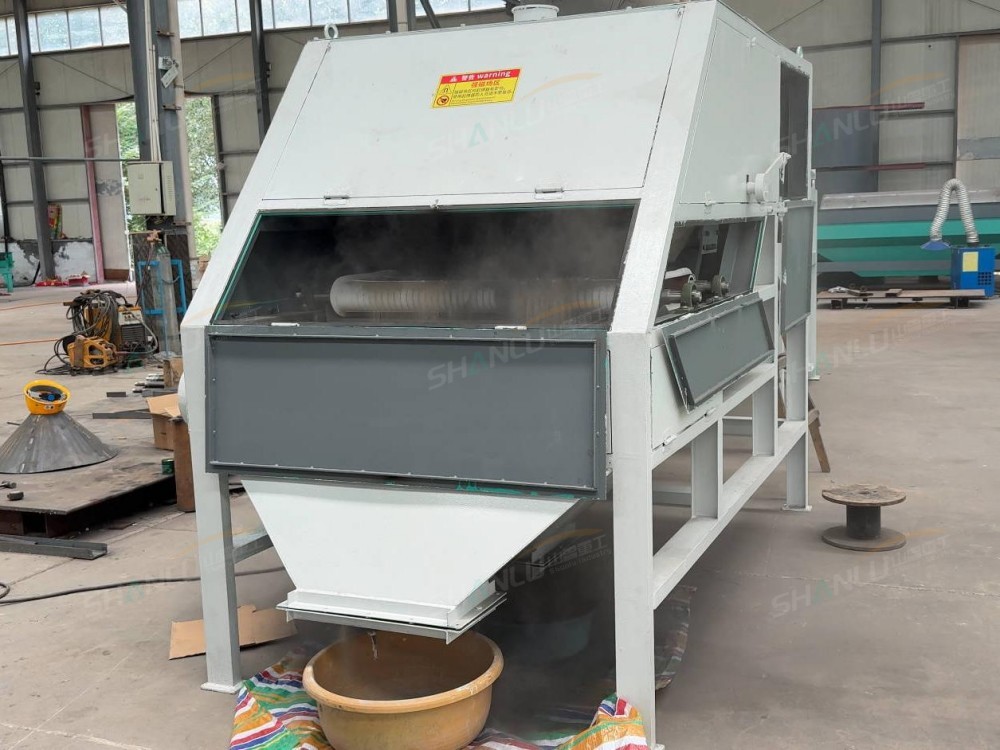
The primary reason for the temperature rise of the magnetic roller is that
the feeding temperature is too high. If the material from the front-end dryer is
not sufficiently cooled before entering the magnetic separator, the hot sand
will transfer heat to the magnetic roller, and the surface temperature of the
magnetic roller can reach 70 ℃ or above. After the working temperature of
neodymium iron boron magnetic materials exceeds 80 ℃, the magnetic domain
structure begins to become unstable, and the magnetic force permanently decays
over a long period of time. It is recommended to install a cooling conveying
section between the dryer and the magnetic separator to allow the sand to
naturally cool down to below 40 ℃ before entering the magnetic separator. If the
production line space is limited, an air cooling device can be installed in
front of the magnetic separator to quickly remove material heat with cold
air.
Blockage of the internal heat dissipation structure of the magnetic roller
can also lead to temperature accumulation. Some magnetic rollers are designed
with internal ventilation ducts or heat dissipation holes. After long-term
operation, dust enters the ventilation ducts, the heat dissipation channels are
blocked, and the heat inside the magnetic rollers cannot be dissipated. Remove
the end cap every quarter and blow the internal ventilation duct with compressed
air to keep the heat dissipation channel unobstructed. If the magnetic roller is
a fully enclosed structure, it is necessary to check whether the external
cooling fan is operating normally, and replace the damaged fan in a timely
manner.
Excessive feeding amount leads to continuous high load operation of the
magnetic roller, and the temperature will also be higher. When the material
passes rapidly on the surface of the magnetic roller, frictional heat is
generated, and the larger the feeding amount, the more frictional heat is
generated. Check if the feeding amount exceeds the rated processing capacity of
the equipment. If it exceeds the standard, adjust the feeding speed
appropriately or widen the effective width of the magnetic roller to disperse
the load. It is recommended to control the surface temperature of the magnetic
roller below 60 ℃. If it feels hot to touch, the machine should be stopped for
troubleshooting.
During daily inspections, touch the magnetic roller bearing seat with the
back of your hand to feel the temperature. If it is found to be significantly
high, follow the order of "check the feeding temperature first, then check the
heat dissipation channel, and finally check the feeding amount" for
troubleshooting. Encountering problems during equipment operation, welcome to
contact the technical team of Shandong Heavy Industry for communication: Manager
Zhang 13583776655 (same as WeChat).