Frequent clogging of the screen mesh and large deviation in grading accuracy
are the two most frequently reported issues by customers. The root cause often
lies not in the screening machine itself, but in the issues with the feed
humidity and screen selection.
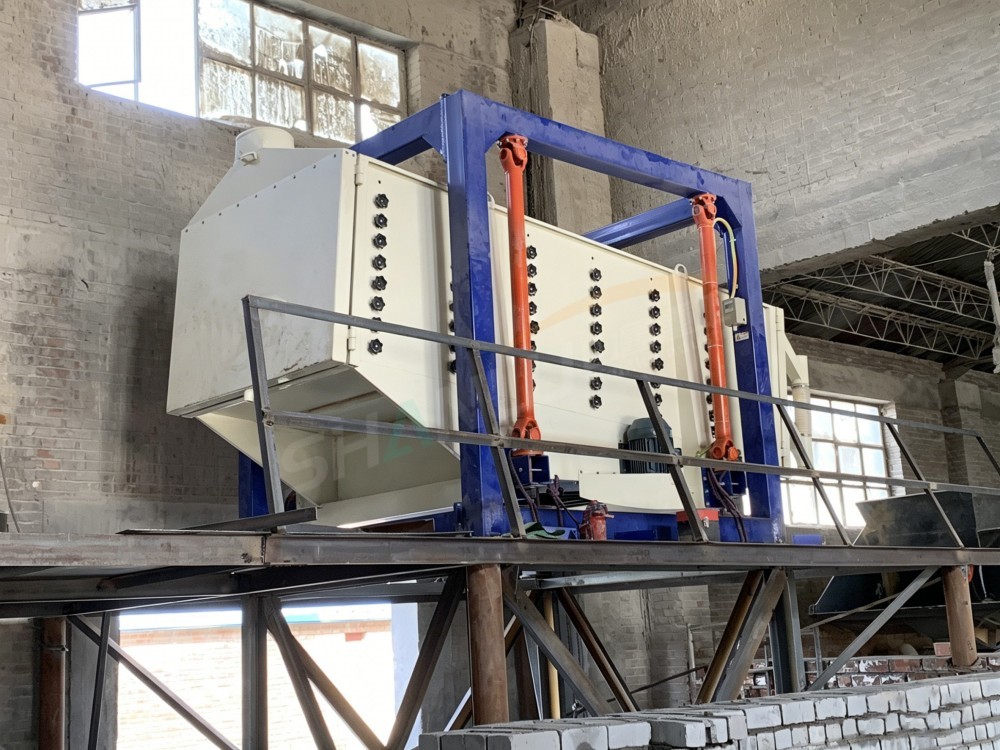
The main reason is that the sieve is clogged and the feed humidity is too
high. When the moisture content of the feed exceeds 5%, fine powder is prone to
adhere to the inner walls of the sieve holes and form blockages. Many companies
overlook this simple indicator and blindly believe that the quality of the
screen mesh is not good. Suggest adding a pre drying process or hot air duct
before the classifier to reduce the moisture content of the feed to below 3%
before entering the screening process. At the same time, a high-frequency
cleaning device is installed below the sieve to continuously clean particles
stuck in the sieve holes using vibration. The tension of the screen mesh is also
worth checking - loose screen mesh can cause insufficient jumping amplitude of
sand and gravel, and cannot fully pass through the screen. It should be
tightened in a timely manner to ensure that the screen surface is flat and
tight.
The main reason for the large deviation in grading accuracy is the improper
selection of screen mesh. If a sieve with a mesh deviation exceeding ± 2% is
used for 80 mesh grading, the grading accuracy will inevitably deviate. The most
direct solution is to replace the precise sieve that meets the standards. The
inclination angle of the screening surface also affects the classification
accuracy - if the inclination angle is too small, the sand and gravel will move
too slowly and accumulate, blocking the screening holes; if the inclination
angle is too large, the sand and gravel will pass too quickly and the screening
will be insufficient. The air volume parameters also need to be calibrated
synchronously, and the air volume of fine mesh screens is generally controlled
at 1500-2000m ³/h, which is more suitable. If fine particles are carried away
and lost, it is necessary to optimize the flow guide structure of the
classifier, adjust the position of the air outlet, and install a fine particle
recovery device if necessary.
If the sieve is clogged, first check the moisture content. If the accuracy is
off, first check the mesh size of the sieve. These two basic tasks have been
done well, and the grading effect can be much more stable.