The permanent magnet drum magnetic separator is the main equipment for
removing iron from quartz sand. Many customers have reported that the iron
removal effect has significantly declined after half a year of operation, and
the Fe ₂ O3 content has rebounded from below 0.05% to above 0.1%. The problem
usually does not lie in the magnetic material itself, but in two easily
overlooked maintenance details.
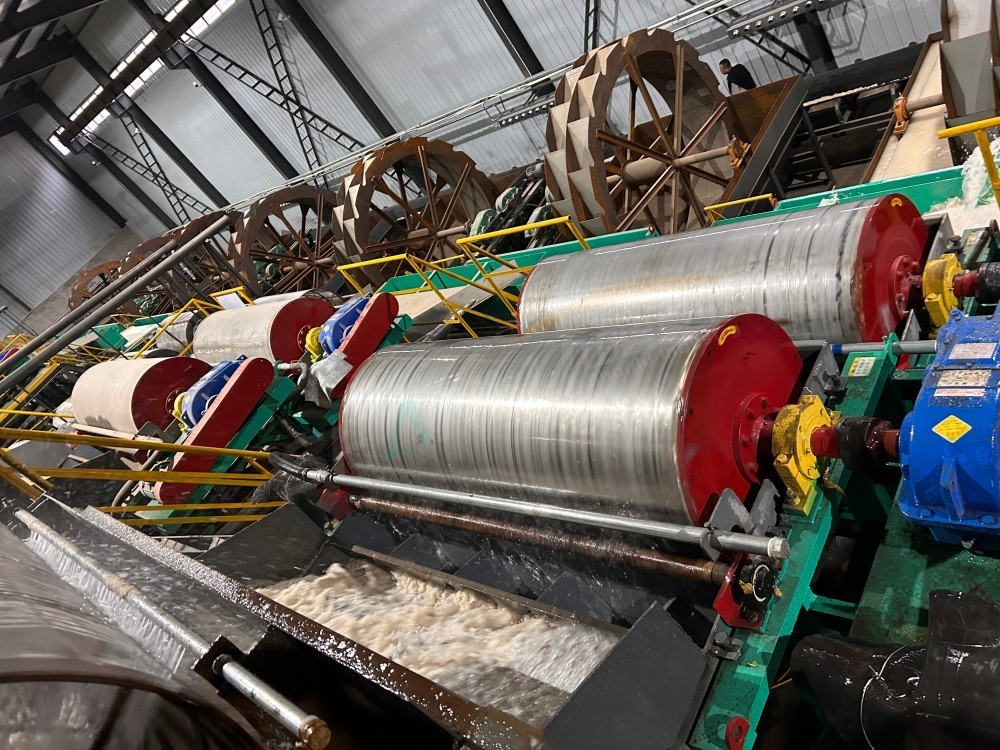
The accumulation of dust and iron filings on the surface of the magnetic
system is the primary inspection item. After long-term operation, the surface of
the magnetic system will adsorb a layer of fine-grained ferromagnetic material,
which is equivalent to wearing a "iron powder armor" through the magnetic field,
and the magnetic field is severely shielded. It is recommended to shut down the
machine every two weeks and thoroughly rinse the surface of the magnetic system
and the outer wall of the drum with a high-pressure water gun. Actual
measurements have shown that the magnetic field strength on the surface of the
drum can be restored to over 90% of its initial value after cleaning. If the
magnetic material itself is poor - the magnetic field strength of ordinary
ferrite magnetic materials is often less than 10000Gs, making it difficult to
remove weak magnetic impurities - even cleaning cannot achieve the desired
effect. It is recommended to use neodymium iron boron magnetic system for deep
iron removal of quartz sand, with a magnetic field strength of 12000-15000Gs.
When using a Gaussian meter for detection, if the surface magnetic field is
lower than 8000Gs, it is necessary to consider replacing the magnetic block.
The lubrication condition of bearings cannot be ignored. The lack of oil in
the bearing leads to unstable drum speed, and the residence time of the material
in the magnetic field zone fluctuates, resulting in natural fluctuations in the
iron removal effect. Check the bearing temperature weekly (normally ≤ 65 ℃), and
replenish lithium based grease every 500 working hours. In addition, a too fast
feeding speed can also shorten the contact time between the material and the
magnetic field. It is recommended to control the line speed of the belt conveyor
at 0.6-1.0m/s, and install a material feeder in front of the magnetic separator
to evenly distribute the material, with the material layer thickness controlled
at 5-8mm.
Whether the iron removal effect of the magnetic separator is good or not
depends on whether the surface of the magnetic system is dry or not, and whether
the bearing lubrication is not in place. If these two things are done properly,
the stability of iron removal during the equipment's lifecycle will be basically
guaranteed.