Ceramic filter machines are widely used in the dewatering of quartz sand
concentrates, but many customers have reported a significant decrease in
processing capacity, thinning of filter cake, and high moisture content after
several months of operation. The problem usually does not lie in the filter
itself, but rather in the two links of ceramic plate regeneration and vacuum
system.
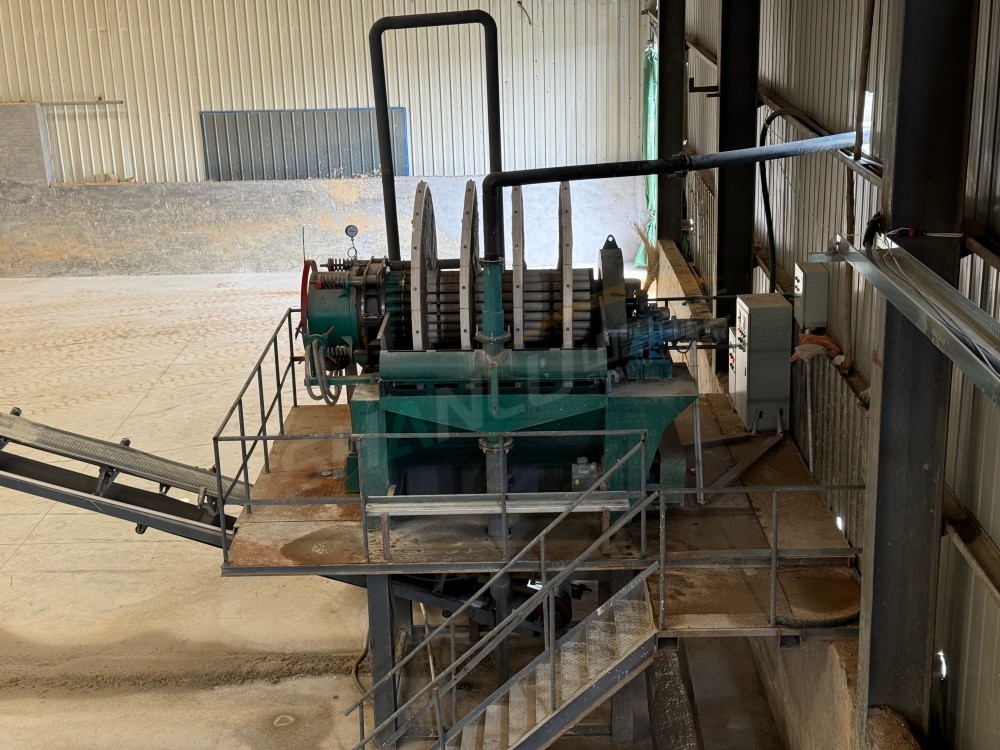
The blockage of micropores in ceramic plates is the top reason for the
decline in production capacity. There are two main types of microporous
blockage: one is that fine particles in the slurry are embedded inside the
pores, which cannot be flushed out by conventional high-pressure water
backwashing; The second reason is that the pickling cycle is unreasonable, and
calcium and magnesium deposits gradually accumulate on the surface and inside
the pores of the ceramic plate. The correct approach is to change the pickling
cycle from "once a month" to judging based on changes in filtrate flow rate -
when the filtrate flow rate decreases by more than 20% under the same feed
concentration, pickling should be arranged once. It is recommended to soak in a
2% -3% oxalic acid or citric acid solution for 4-6 hours before rinsing with
clean water until neutral. Although strong acids such as nitric acid have a fast
cleaning effect, they can cause irreversible damage to the ceramic substrate. In
daily maintenance, it is also important to pay attention to whether the
ultrasonic cleaning device is working properly. After the ultrasonic oscillator
is damaged or the power is attenuated, it is difficult to restore the original
flux of the ceramic plate solely by acid washing.
The decrease in vacuum degree is another common fault point. When the vacuum
degree is below 0.065MPa, the dehydration ability is significantly insufficient.
The reasons may be vacuum pipeline leakage, insufficient circulating water in
the vacuum pump, worn distribution head, damaged ceramic plate, and loose drain
valve of the filtrate tank. After one or two years of use, the vacuum degree
gradually decreases and there is no obvious leakage in the pipeline. It is
mostly due to grooves in the wear-resistant disc of the distribution valve
caused by long-term use, which affects the flatness of the contact surface. The
backwash water pressure should also be maintained at 0.06-0.09MPa. If the
pressure is too low, the cleaning effect will be poor, and if the pressure is
too high, it will damage the filter plate.
The turbidity of the filtrate often indicates the rupture of the ceramic
plate. After microcracks appear on the ceramic plate, a large amount of air
enters the vacuum system through the cracks, causing fluctuations in vacuum
degree and turbidity of the filtrate. If the contaminated filtrate is directly
used as backwash water, it will further block the micropores of the ceramic
plate, forming a vicious cycle. The gap between the scraper and the ceramic
plate is also worth paying attention to - the normal gap should be maintained at
around 2mm. Excessive gaps can cause the filter cake to not be scraped clean and
affect production capacity; If the gap is too small, it will squeeze the ceramic
plate and cause fracture. Regularly checking the strength of the scraper bracket
and the verticality of the ceramic plate installation can effectively avoid this
hidden danger.
If you encounter specific problems during equipment operation and need
technical support, you can contact the technical team of Shandong Heavy
Industry: Manager Zhang at 13583776655 (same as WeChat).