The permanent magnet suspension iron remover is installed above the belt
conveyor to remove mechanical iron such as iron filings and bolts mixed in
quartz sand. But many customers have reported that the iron absorption effect of
the equipment has significantly decreased after a period of use, and iron
impurities above the belt still run downstream. The problem usually lies not in
the magnetic block itself, but in the suspension height and material layer
thickness.
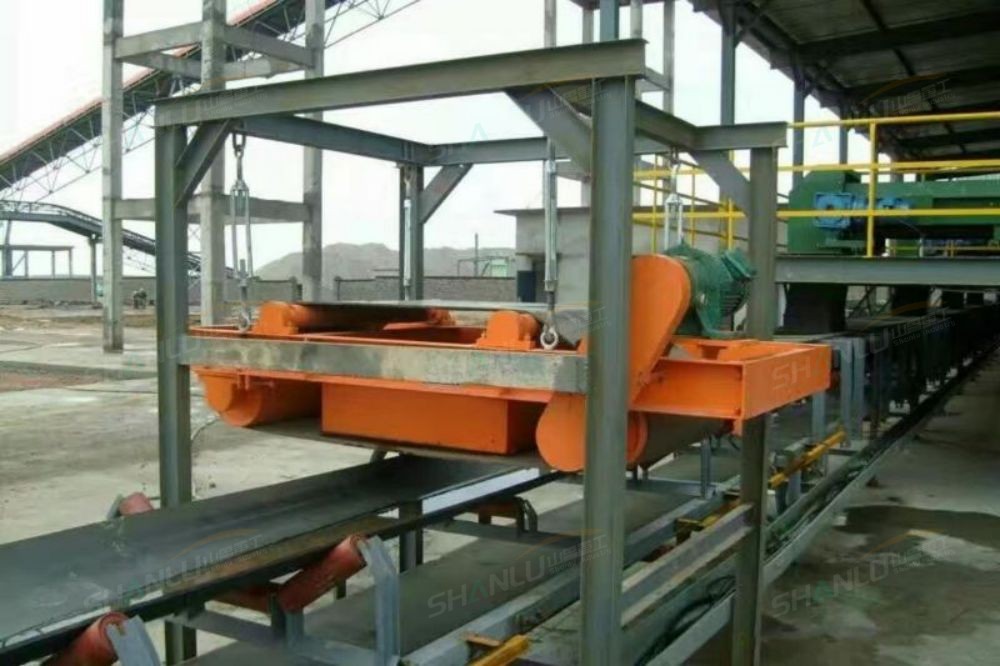
High suspension height is the primary reason for poor iron suction effect.
The magnetic force of the suspended iron remover decays sharply with increasing
distance, and when the suspension height exceeds 200mm, the magnetic force has
little effect on the iron impurities at the bottom of the material layer. It is
recommended to control the suspension height between 150-200mm, with specific
values adjusted according to the belt width and material layer thickness. The
inspection method is simple: place a few iron nuts on the belt and observe if
they can be lifted. If they cannot be lifted, it indicates that the height is
too high and the suspension chain needs to be lowered or the bracket needs to be
adjusted.
Excessive thickness of the material layer can also lead to missed detection
of iron impurities. When the thickness of the material layer exceeds 80mm, the
magnetic force of the iron filings buried in the bottom layer cannot reach them,
and they directly enter the next process with the material. A flat plate or
fabric feeder can be installed in front of the iron remover to control the
thickness of the material layer between 50-80mm. When the feeding amount needs
to be increased, it is recommended to widen the belt or reduce the belt speed
first, and it is not recommended to simply stack the material layer high.
Magnetic block demagnetization or seal damage can also cause a decrease in
magnetic force. The permanent magnet iron remover works in a humid and dusty
environment for a long time, and the magnetic block becomes damp and
demagnetized after sealing aging. Use a Gaussian meter to test the surface
magnetic field strength of the magnet once every quarter. If it decreases by
more than 20% compared to the initial value, it is necessary to open and inspect
the sealing and magnetic block status, and replace the demagnetization block in
a timely manner.
During daily inspections, pay attention to observing whether the iron
unloading port is smooth. If the adsorbed iron filings accumulate too thick and
are not cleaned up in time, it will form magnetic shielding and affect the
subsequent adsorption effect. For equipment operation related issues, please
call Manager Zhang at 13583776655 (same as WeChat) at Shandong Heavy
Industry.