After running for a period of time, the sealing failure at the inlet and
outlet ends of the three return drum dryer has caused air leakage, which is a
concern for many customers. Hot air runs away from the gaps, fuel consumption
increases, but the moisture content of the discharged material cannot be
reduced, and the dust on site also increases significantly.
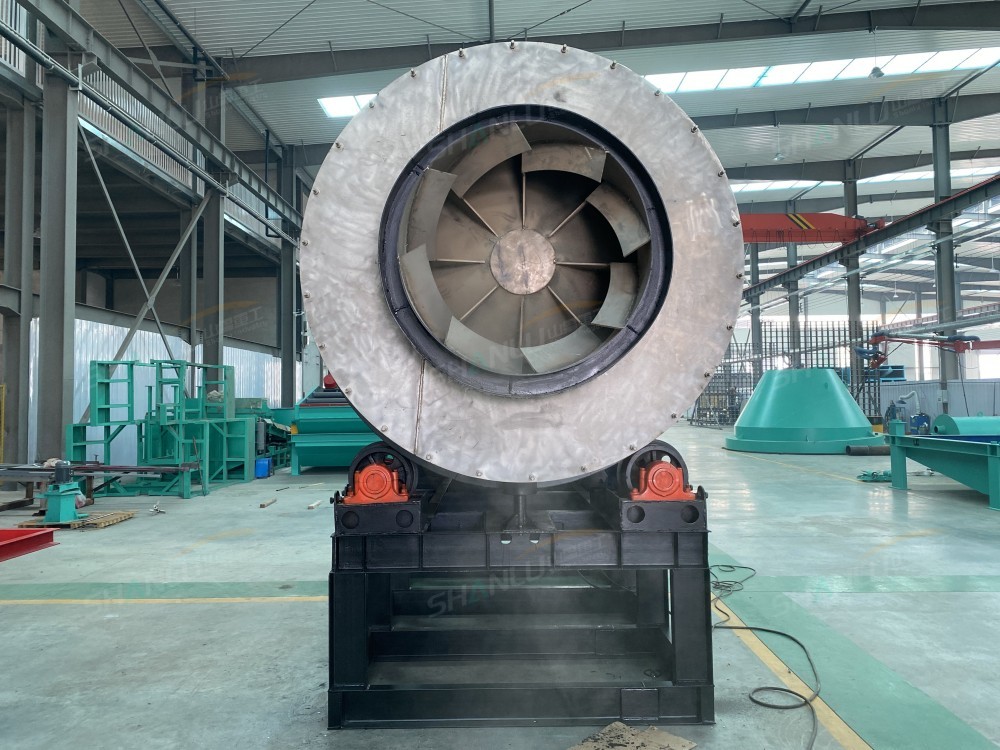
The wear of seals is the primary cause of air leakage. The inlet and outlet
of the dryer are usually sealed with a combination of graphite blocks and fish
scales. After long-term operation, the graphite blocks wear and become thinner,
the elasticity of the fish scales decreases, and gaps appear on the sealing
surface. The judgment method is simple: after stopping the machine, use a
flashlight to shine from the outside of the seal. If the light can be seen from
the inside, it indicates that the gap has exceeded the standard and the seal
needs to be replaced. Graphite blocks are usually replaced every six months,
while fish scales can be adjusted or replaced according to wear and tear.
Excessive jumping of the cylinder can also accelerate seal failure. When the
rolling ring of the cylinder is worn or the position of the supporting wheel is
offset, the jumping amount of the cylinder during operation exceeds 2mm, and the
seal and the cylinder cannot maintain a uniform fit, resulting in fluctuating
local gaps. The contact status between the rolling ring and the supporting wheel
should be checked quarterly, and if the supporting wheel is severely worn, it
should be replaced in a timely manner. When adjusting the position of the
supporting wheel, calibrate it with a spirit level to ensure that the axis of
the cylinder is parallel to the horizontal plane.
Excessive temperature at the sealing area can also accelerate the aging of
the sealing components. The temperature at the inlet and outlet of the three
return dryer is usually above 100 ℃, and ordinary rubber seals have a short
lifespan in this environment. It is recommended to use high-temperature
resistant graphite packing or ceramic fiber sealing components, which can
withstand temperatures up to 300 ℃ or above. At the same time, a cooling air
ring can be installed at the seal to introduce a small amount of cold air to
reduce the working temperature of the seal.
During daily inspections, pay attention to observing whether there is dust
escaping from the inlet and outlet ends, and promptly deal with any air leaks
found. At the initial stage of air leakage, it only increases energy
consumption, and over time, the seals are completely damaged, making replacement
time-consuming and laborious. For equipment operation related issues, please
call Manager Zhang at 13583776655 (same as WeChat) at Shandong Heavy
Industry.