The fluctuating overflow concentration during the operation of hydraulic
classifiers is a common concern for many customers. High concentration makes it
difficult for fine powder to escape, resulting in a decrease in grading
efficiency; Low concentration results in significant water waste and increases
the burden of subsequent concentration and pressure filtration. The root cause
of the problem often lies not in the equipment itself, but in the mismatch
between the overflow weir and the feeding amount.
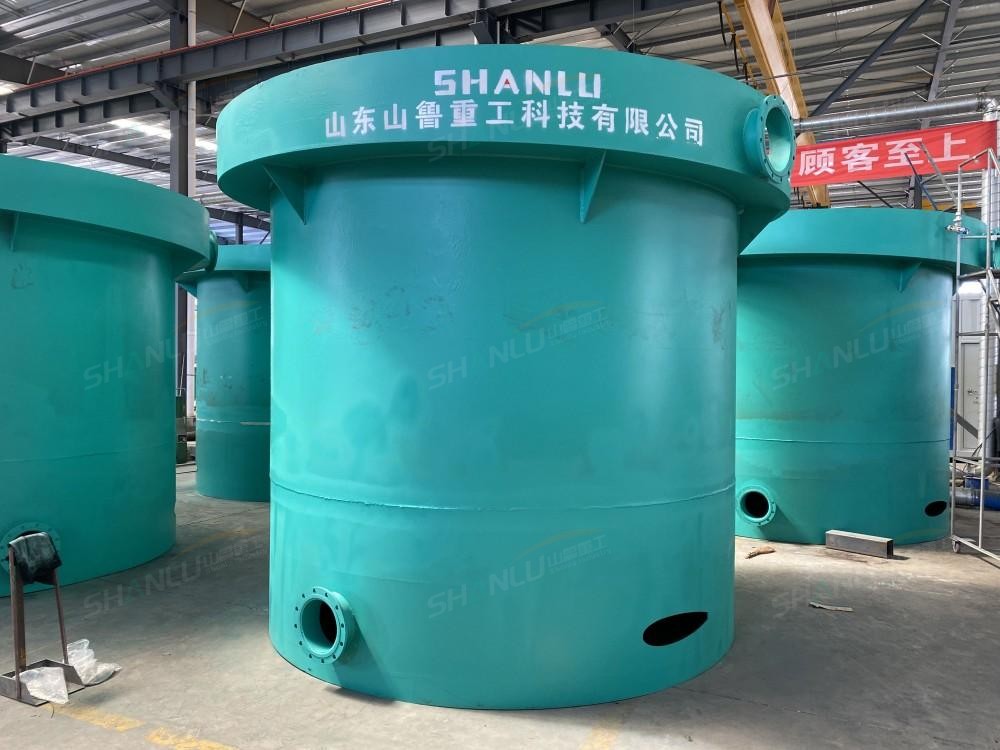
If the height of the overflow weir is not appropriate, the overflow
concentration cannot be stabilized. When the overflow weir is too low, the
slurry stays in the tank for a short time, and coarse particles also cross the
weir and enter the overflow, resulting in a high concentration; If it is too
high, the settling path of fine particles will be too long, and a large amount
of fine powder will sink into the bottom flow, resulting in a low overflow
concentration. It is recommended to first measure the actual height of the
overflow weir, which should be controlled at about two-thirds of the height of
the tank. Adjust by lifting 50-100mm each time, observe for 2 hours, and then
take samples for testing to gradually find the optimal position.
The feeding amount fluctuates too much, and the overflow concentration jumps
up and down accordingly. When the front-end incoming materials fluctuate, the
liquid level height and rising water flow velocity inside the classifier also
change accordingly. When the feeding amount suddenly increases, the overflow
flow becomes thick, and when it decreases, the overflow flow becomes thin.
Suggest adding a buffer tank before the classifier to stabilize the feeding
amount. Check the feed concentration and flow rate once per shift, and promptly
investigate the front-end equipment when the fluctuation exceeds 10%.
The unstable flow rate of rising water also affects the overflow
concentration. When the water pressure fluctuates or the valve opening changes,
the rising water flow velocity changes, and the settling state of fine particles
changes accordingly. Install a pressure gauge on the inlet pipe to maintain
stable water pressure. It is recommended to configure the water flow rate at 2-3
times the feeding amount, which can be monitored by a float flowmeter to detect
fluctuations and adjust the valve in a timely manner.
During daily inspections, samples are taken every 2 hours to test the
overflow concentration, and it is ideal to control it within the range of 10%
-15%. When the concentration is consistently high or low, check it one by one in
the order of "first check the overflow weir, then check the feeding amount, and
finally check the water flow rate". For equipment operation related issues,
please call Manager Zhang at 13583776655 (same as WeChat) at Shandong Heavy
Industry.