The vibrating dewatering screen is responsible for reducing moisture in the
quartz sand wet production line, but frequent breakage of the screen mesh is a
headache for many customers. Some mesh screens develop cracks within less than a
week of replacement, causing material to leak from the opening and greatly
reducing the dewatering effect. The problem usually lies not in the quality of
the sieve itself, but in the tension of the sieve surface and the feeding
method.
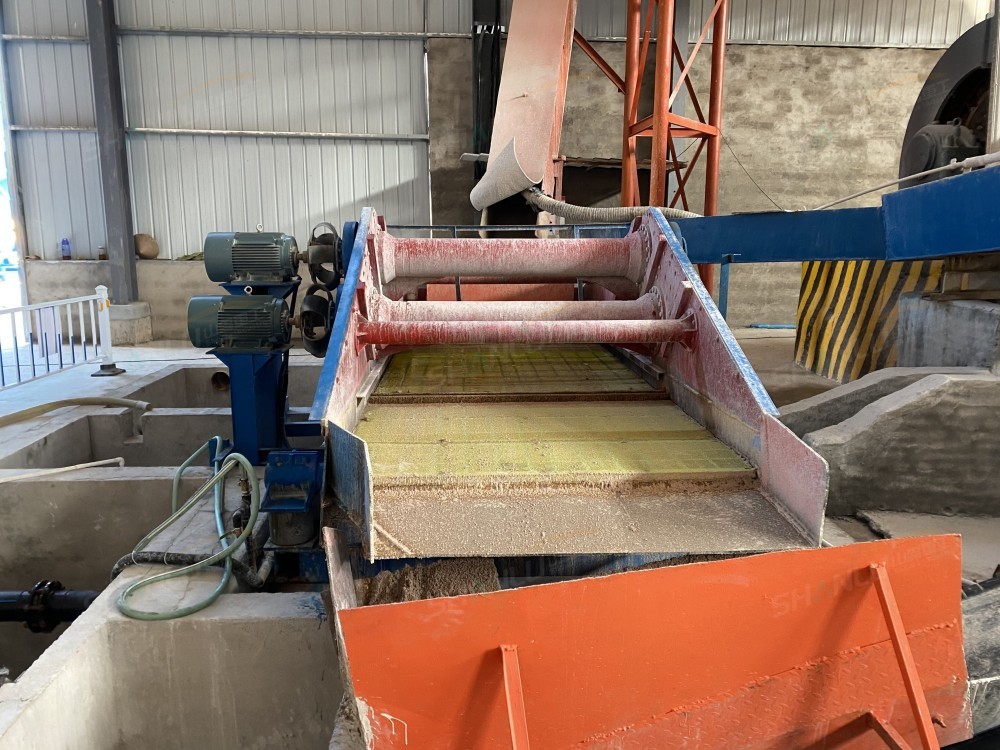
Insufficient tension of the sieve is the primary cause of early damage to the
sieve. If the tension of the polyurethane screen is insufficient during
installation, the screen will vibrate up and down during operation and
repeatedly collide with the support beam, causing cracks at the fixed bolt holes
in a short period of time. The correct approach is to use a tensioning tool to
tighten the screen mesh until it does not sink when pressed by hand, and then
tighten the pressure plate bolts. After each replacement of the screen mesh, run
it empty for 15 minutes and observe if the screen surface is loose. If any
looseness is found, immediately re tighten it.
Feeding eccentricity or excessive thickness of the material layer can also
accelerate the damage of the screen mesh. If materials are concentrated on one
side of the screen surface for a long time, the impact on the screen mesh in
that area will be much greater than other parts, and local damage will soon
occur. A fabric board should be installed at the feed inlet of the dewatering
screen to evenly spread the material over the entire screen surface. It is
recommended to control the thickness of the material layer within 30-50mm. If it
is too thick, the bottom material will be difficult to pass through the sieve
and will increase the load on the sieve surface. When the feeding amount needs
to be increased, priority should be given to widening the screen surface or
reducing the feeding speed, and do not rely on stacking high material layers to
increase production.
Wear of the support beam or aging of the rubber pad can also cause the screen
mesh to break. Sharp edges appear on the surface of the support beam after wear,
and the sieve mesh repeatedly rubs against the sharp edges during vibration,
quickly cutting through. Check the wear of the support beam once a quarter, and
if the wear exceeds 2mm, weld and polish it flat. The rubber cushion between the
support beam and the screen will lose its buffering effect after aging and
hardening, which will also accelerate the damage of the screen. It is
recommended to replace the rubber cushion every six months.
During daily inspections, observe the screen surface for any damage or
looseness once per shift. If any cracks are found, replace them in a timely
manner. Do not wait until a large area is torn before stopping the machine. For
equipment operation related issues, please call Manager Zhang at 13583776655
(same as WeChat) at Shandong Heavy Industry.