The continuous high temperature of the excitation coil during the operation
of the vertical gradient magnetic separator is a more dangerous signal than a
decrease in processing capacity. After the coil temperature exceeds 80 ℃, the
magnetic field strength begins to significantly decrease. Long term overheating
can also cause insulation layer aging, inter turn short circuits, and in severe
cases, the entire coil can be burned out, resulting in high maintenance costs.
The problem usually lies in the cooling system.
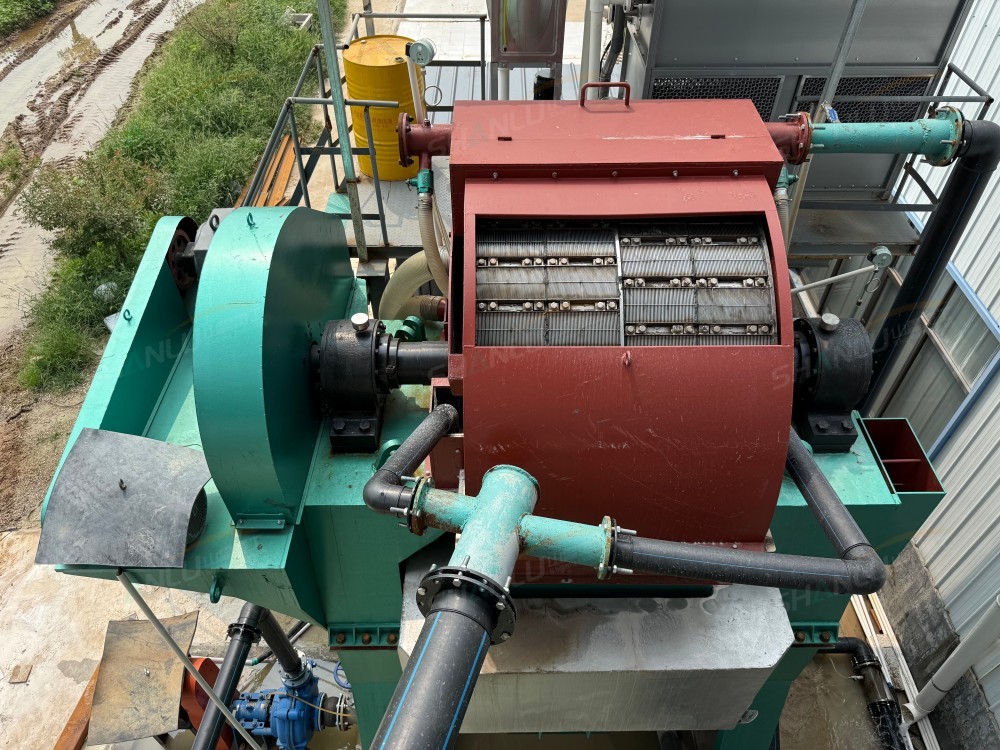
Blockage in the cooling water circuit is the top cause of coil overheating.
The coil relies on circulating water to carry away heat. When the water quality
is unclean or not cleaned for a long time, scaling and impurities deposit on the
inner wall of the waterway, the water flow becomes smaller and the heat transfer
efficiency drops sharply. The judgment method is simple: touch the inlet and
outlet pipes with your hand. If the temperature difference is very small, it
indicates that the water flow is insufficient. It is recommended to check the
cooling water flow and pressure once a month, and use a specialized cleaning
agent to cycle and clean the water circuit once every quarter. If conditions
permit, the open water cooling system can be replaced with a closed loop cooling
system to isolate impurities from the source.
Excessive cooling water temperature can also lead to poor heat dissipation of
the coil. When the inlet water temperature exceeds 30 ℃, the temperature
difference between the coil and the cooling water decreases, and the heat
dissipation effect is greatly reduced. It is necessary to check whether the
cooling tower or chiller is working properly, and promptly replenish
low-temperature water or increase cooling capacity when the water temperature is
too high. During the high temperature period in summer, special attention should
be paid to changes in water temperature, and auxiliary refrigeration devices can
be installed if necessary.
If the excitation current exceeds the set value for a long time, the heat
generation of the coil will inevitably increase. When the feeding amount is too
large or the magnetic medium is blocked, the operator often increases the
current to maintain the magnetic field strength, resulting in a further increase
in coil temperature and forming a vicious cycle. It is recommended to check the
reading of the ammeter. If it continues to exceed the rated value by more than
10%, the feeding amount should be appropriately reduced or the machine should be
stopped to clean the magnetic medium, rather than simply increasing the
current.
Pay attention to the temperature control instrument during daily operation,
and immediately reduce the load or stop the machine for heat dissipation when
the temperature approaches the warning value. When the coil temperature is
stably controlled below 40 ℃, the equipment operates most reliably. For
equipment operation related issues, please call Manager Zhang at 13583776655
(same as WeChat) at Shandong Heavy Industry.