After running for a period of time, the cylinder of the drum screen deviates,
which is a problem encountered by many customers. The cylinder rotates with one
side high and the other low, resulting in uneven distribution of material on the
screen surface. The wear rate of the supporting wheels is significantly
accelerated, and in severe cases, abnormal noise is produced due to friction
between the cylinder and the frame. The problem usually lies in the adjustment
of the idler and the levelness of the cylinder.
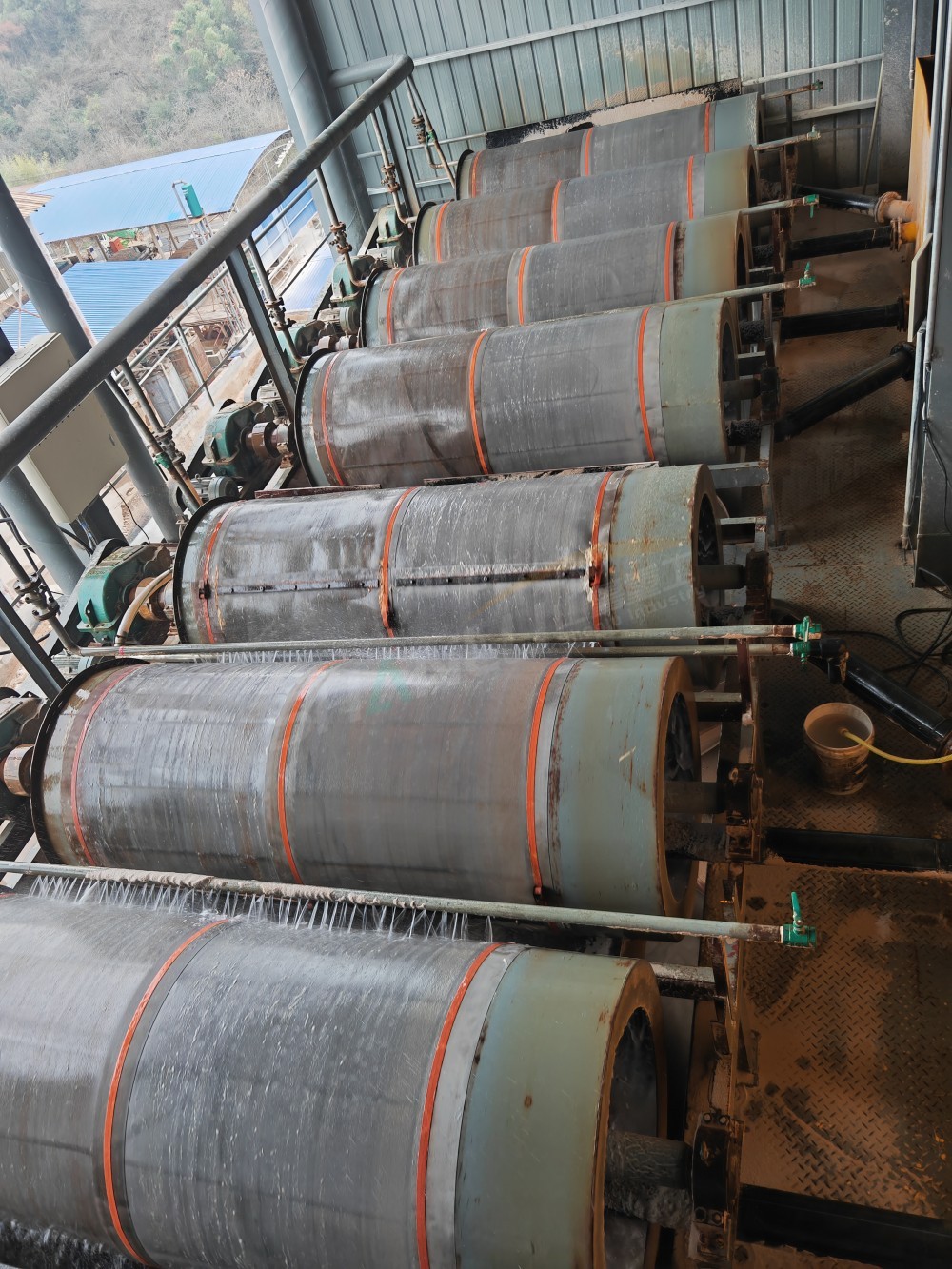
The primary reason for deviation is that the four supporting wheels are not
on the same horizontal plane. The drum screen relies on four supporting wheels
to rotate the cylinder. When the installation height or wear degree of the
supporting wheels are inconsistent, the axis of the cylinder tilts and naturally
moves towards the lower side during operation. The inspection method is simple:
use a spirit level to measure the top heights of the four supporting wheels
separately. If the deviation exceeds 2mm, it needs to be readjusted. When
adjusting, set the two supporting wheels on the diagonal as a group and lift
them synchronously, adjusting 1-2mm each time. Observe the direction of the
cylinder's movement until it stabilizes and no longer moves.
Uneven wear of the supporting wheels can also exacerbate deviation. Quartz
sand dust enters the supporting wheel bearing or wheel surface, causing dents or
uneven wear on the rear wheel surface. The contact surface between the cylinder
rolling ring and the supporting wheel is subjected to uneven force, and the
deviation becomes increasingly severe. It is recommended to check the wear of
the supporting wheel surface once every quarter, and replace or repair it by
turning when the wear exceeds 2mm. Lubricate the roller bearing every 500
working hours to maintain flexible rotation.
The contact angle between the cylinder rolling ring and the supporting wheel
also needs to be checked. Normally, the axis of the supporting wheel should be
parallel to the axis of the cylinder, and the contact surface should be
uniformly stressed. If the deflection angle of the supporting wheel is too
large, the cylinder will receive lateral thrust during rotation, which will also
cause deviation. Adjust the positioning bolts of the supporting wheel bracket,
use a ruler to compare the side of the supporting wheel with the axis of the
cylinder, and control the deviation within 1mm.
During daily inspections, pay attention to observing whether the cylinder is
running smoothly and whether there is periodic movement. When deviation is
detected, follow the order of "first measure the height of the supporting wheel,
then check the wear of the wheel surface, and finally check the contact angle"
to investigate one by one. Encountering problems during equipment operation,
welcome to contact the technical team of Shandong Heavy Industry for
communication: Manager Zhang 13583776655 (same as WeChat).