During the operation of a single drum dryer, the surface temperature of the
drum is too high, causing it to become too hot to stay when touched by hand,
which is an energy consumption problem encountered by many customers. The heat
should have been used to dry the material, but a large amount is lost from the
cylinder wall, causing fuel consumption to increase, but the moisture content of
the discharged material cannot be reduced. The problem usually lies in two
aspects: the insulation layer and the internal lifting structure.
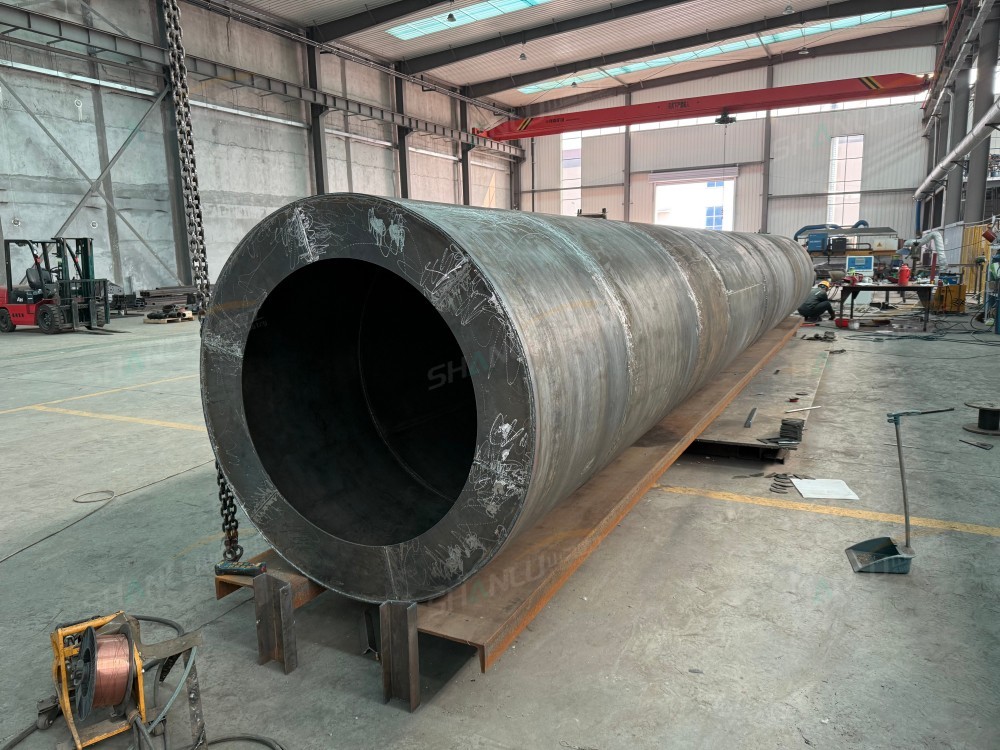
The lack or damage of insulation layer is the primary cause of heat
dissipation in the cylinder. The outer wall of the drum of a single drum dryer
is usually covered with rock wool or aluminum silicate insulation layer, and
protected by colored steel plate. After long-term operation, the insulation
layer becomes damp and compacted, and the color steel plate rusts and falls off,
resulting in a significant decrease in insulation effect. The inspection method
is simple: use an infrared thermometer to measure the surface temperature along
the length direction of the cylinder. Normally, it should not exceed 60 ℃. If a
certain section is significantly higher, it indicates that the insulation layer
at that location has failed. Remove the damaged insulation layer during repair,
refill rock wool and compact it, fix the outer color steel plate with rivets,
and apply high-temperature resistant sealant at the joints.
The lifting plate is worn or missing, and heat is directly transferred to the
cylinder wall. The function of the lifting plate is to raise the material to
form a material curtain, allowing the hot air to fully exchange heat with the
material. After the material lifting plate wears out, the material cannot be
lifted up, and a large amount of wet sand slides against the cylinder wall. The
heat is absorbed by the cylinder wall and dissipated into the air. It is
recommended to check the wear of the lifting plate once a month, and replace it
promptly if the wear exceeds one-third of the original height. The spacing
between the lifting plates should be controlled between 150-200mm. If the
spacing is too large, the material coverage will be uneven, and the temperature
of the local cylinder wall will be too high.
If the hot air temperature is too high or the air volume is too large, it
will also push up the temperature of the cylinder. When the outlet temperature
of the hot blast stove exceeds the set value, the cylinder is overheated and the
surface temperature naturally increases. Check if the opening of the air door of
the hot air stove burner is appropriate. If the flame color turns white and
shiny, it indicates that the air volume is too high and the temperature is too
high. The air door should be closed appropriately. The hot air temperature is
controlled within a reasonable range, which can meet the drying requirements
without overheating the cylinder wall.
During daily inspections, an infrared thermometer is used to measure the
surface temperature of the cylinder once per shift. If it is found to be too
high, it should be checked in the order of "first check the insulation layer,
then check the lifting plate, and finally check the hot air temperature".
Encountering problems during equipment operation, welcome to contact the
technical team of Shandong Heavy Industry for communication: Manager Zhang
13583776655 (same as WeChat).