The drum screen is responsible for controlling the particle size in the pre
classification of quartz sand, but many customers have reported that oversized
coarse particles are often mixed into the screened products, or the fine powder
that is sieved out is not thoroughly screened, resulting in significantly lower
screening accuracy than required. The problem usually lies in the coordination
of three aspects: sieve size, cylinder speed, and feeding uniformity.
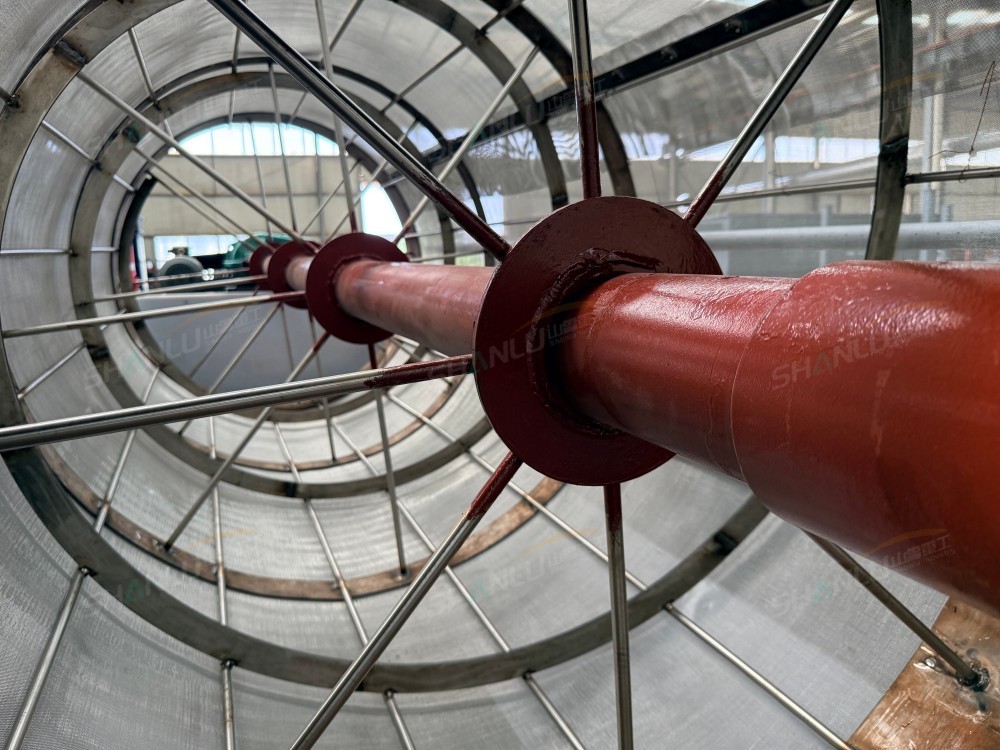
The mismatch between the sieve size and the incoming particle size is the
primary reason for the failure to meet the accuracy standards. When the sieve
aperture is too large, oversized coarse particles directly pass through the
sieve aperture and mix into the finished product. When the sieve aperture is too
small, the fine powder that passes through the sieve cannot penetrate, and the
fine powder content in the undersized material is low. The appropriate aperture
should be selected according to the particle size requirements of the finished
product, and the actual size of the sieve holes should be checked regularly with
calipers. After the sieve plate wears out, the aperture deformation expands,
which can also lead to a decrease in screening accuracy. The sieve plate with
severe wear needs to be replaced in a timely manner. When installing a new sieve
plate, pay attention to the consistency of the aperture direction. Installing it
upside down can also affect the screening effect.
Improper rotation speed of the cylinder results in insufficient residence
time of the material on the screen surface. When the rotation speed is too high,
the material rapidly rolls and advances inside the cylinder, and fine particles
are not able to contact the sieve holes before being carried by coarse particles
and discharged from the discharge end; If the rotation speed is too low, the
material layer will accumulate too thick, making it difficult for the bottom
fine powder to pass through the sieve. The normal speed is generally controlled
at 12-18r/min. When processing materials with high fine powder content, the
larger value is taken, and when coarse particles are the main component, the
smaller value is taken. The speed adjustment is completed through a frequency
converter, with each adjustment of 2r/min. Observe the screening effect for 2
hours before deciding the next step.
Uneven feeding can also lower the screening accuracy. When materials are
concentrated on one side of the sieve surface, the material layer in that area
is too thick and the fine powder is not fully sieved; The other side of the
material layer is too thin, and coarse particles are prone to bounce directly
through the sieve holes. A fabric board should be installed at the feed inlet of
the drum screen to evenly distribute the material along the axial direction of
the cylinder. When the feeding amount fluctuates greatly, a buffer silo can be
added at the front end to stabilize the feeding.
During daily inspections, samples are taken once per shift to test the
particle size of the undersized material. If an increase in oversized particles
is found, they are checked in the order of "first check the sieve hole size,
then adjust the cylinder speed, and finally check the feed distribution". Shanlu
Heavy Industry has been serving in the field of quartz sand screening equipment
for many years, and can provide suggestions for selecting drum screen holes and
adjusting speed based on material characteristics. Encountering problems during
equipment operation, welcome to contact the technical team of Shandong Heavy
Industry for communication: Manager Zhang 13583776655 (same as WeChat).