The three return drum dryer works in series with three concentric cylinders,
and the material returns step by step from the inner cylinder to the middle
cylinder and then to the outer cylinder, fully exchanging heat with the hot air.
But many customers encounter a hidden problem: the moisture content in the
discharge is always uneven, some materials in the same batch are thoroughly
dried while others still have moisture, but the hot air temperature and cylinder
speed are normal. The problem often lies in the material leakage between the
partitions of the three cylinders.
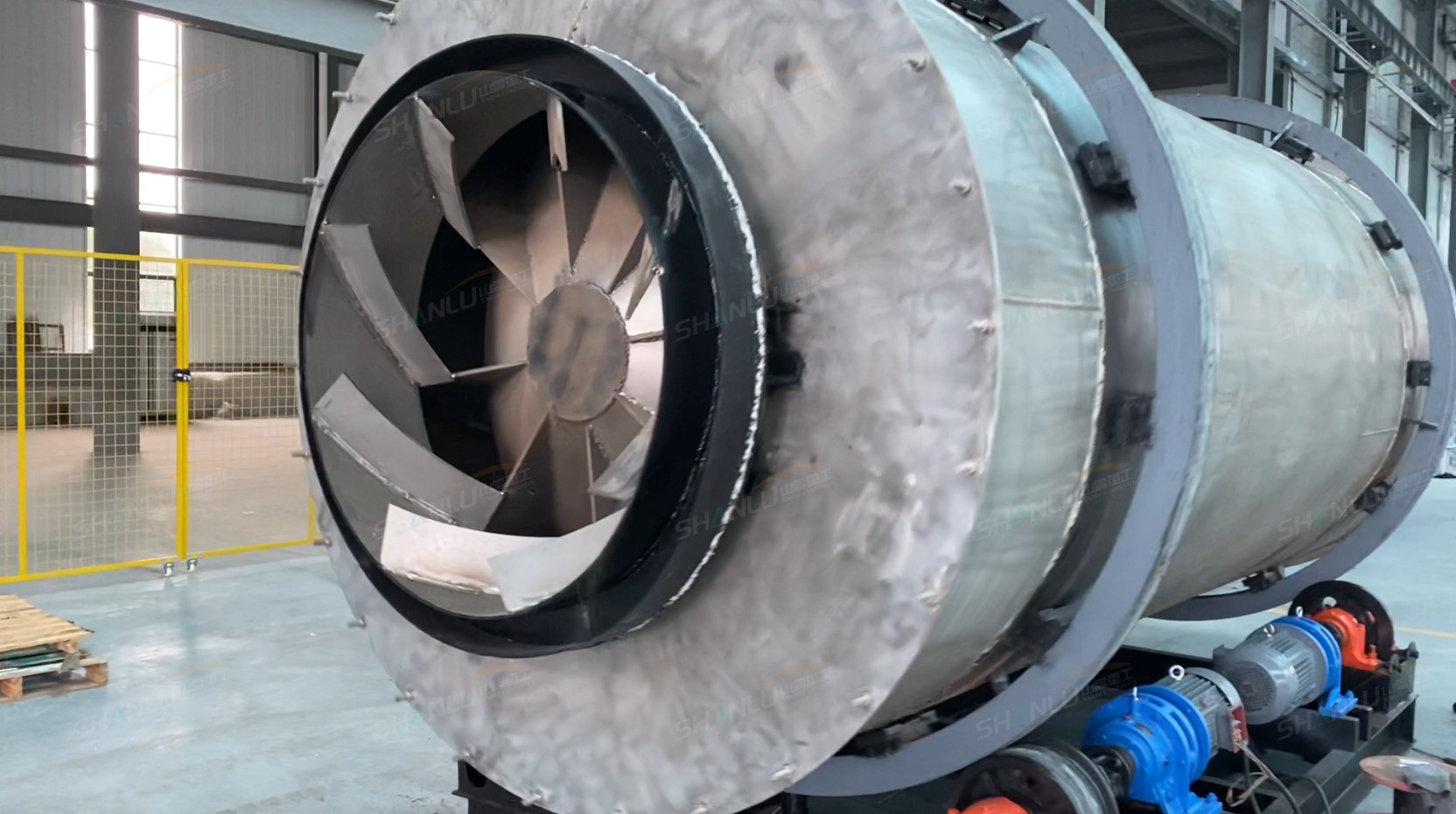
The partition is worn or the weld seam is cracked, and the material has taken
a shortcut. The material is guided back between the three cylinders by the end
partition, and the welding seam connecting the partition and the cylinder is
affected by material erosion and thermal expansion and contraction for a long
time, gradually resulting in cracks or even partial detachment. The material
does not follow the designed route to turn back, but directly enters the next
layer of the cylinder through the crack. This part of the material has a
significantly shortened residence time in the cylinder and is discharged if it
is not fully dried. It is manifested as a mixture of dry and wet materials in
the discharge, and the proportion of wet materials is related to the degree of
damage to the partition. It is recommended to enter the cylinder through the
manhole door every six months to check for cracks or rust on the partition
welds. Rust marks are often the starting point of cracks. Promptly repair
welding if cracks are found, and replace the partition if it falls off
severely.
The height of the partition is not enough or the installation angle is
incorrect, and the material cannot be flipped over and flows back. The function
of the partition is to scoop up the material and send it into the next layer of
the cylinder. When the height is insufficient, the material cannot flip over the
partition and accumulates back and forth in the cylinder. Some materials are
repeatedly heated and excessively dried, while others cannot enter the next
layer for a long time. Check if the height of the partition is consistent with
the design drawings and if the installation angle is tilted towards the
discharge direction. When the wear on the top of the partition decreases, it
should be welded and raised in a timely manner.
The material leakage in the cylinder is also related to excessive feeding
volume. When the feeding amount exceeds the design capacity, the filling rate of
the material in the cylinder is too high, and the partition cannot fully guide
the material into the next layer. A large amount of material accumulates in the
cylinder and even overflows from the top of the partition, directly entering the
outer cylinder. Reduce the feeding amount appropriately and observe whether the
uniformity of the discharge is improved. If there is still material leakage
after the feeding amount is normal, then investigate the partition itself.
The discharge of the three return dryer is uneven in dryness and wetness.
Don't just focus on adjusting the temperature of the hot air, check if there is
any material leakage in the partition when entering the drum. Encountering
problems during equipment operation, welcome to contact the technical team of
Shandong Heavy Industry for communication: Manager Zhang 13583776655 (same as
WeChat).