Magnetic separation is the most widely used method for removing iron in the
purification process of quartz sand. However, in actual production, many
customers have reported that the magnetic separation effect is not ideal, and
the problem often lies in the mismatch between equipment selection and material
characteristics. The existence state of iron impurities directly determines
which magnetic separation equipment should be used.
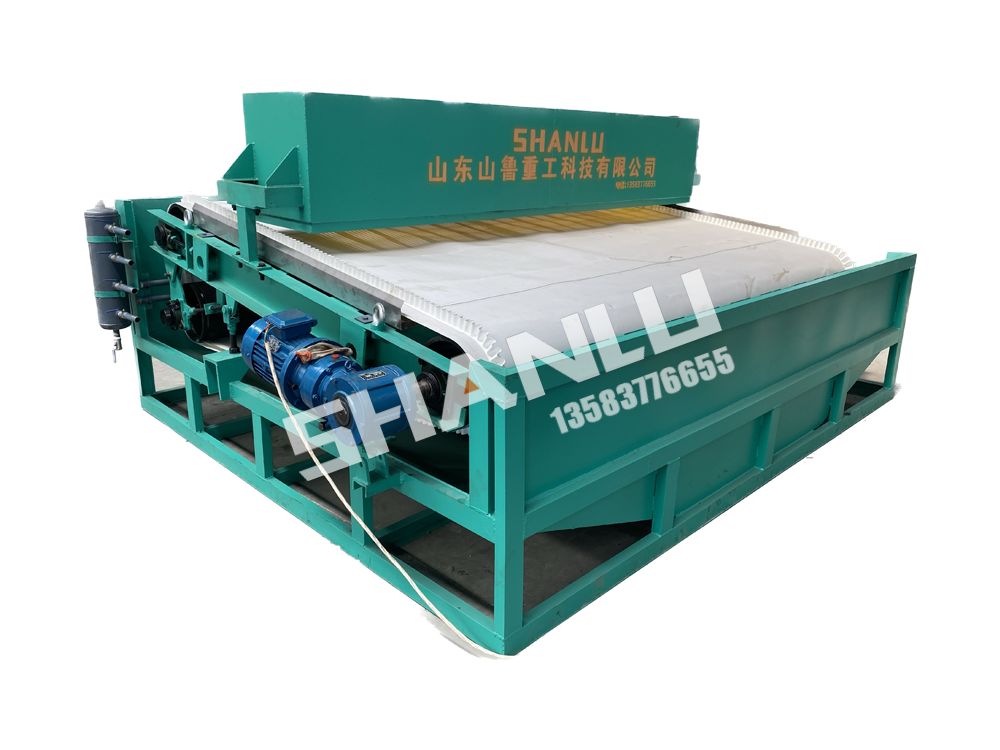
There are three common forms of iron occurrence in quartz sand. The first
type is mechanical iron, which mainly comes from iron shavings and equipment
wear debris mixed in processing steps such as crushing and grinding. It is
usually a strong magnetic particle with a relatively coarse particle size. For
this type of pollution, hanging a permanent magnet iron remover above the belt
conveyor can effectively remove it. The equipment has a low investment cost and
can timely absorb the iron filings before the materials enter the subsequent
equipment, thus protecting downstream equipment. The second type is the primary
mineral iron, which exists in the form of independent mineral particles such as
magnetite, hematite, and ilmenite, and is associated with quartz or dissociated
as a monomer. This type of impurity can be sorted using a permanent magnet drum
magnetic separator. If the mineral particle size is fine and the magnetism is
weak, a high field strength permanent magnet roller magnetic separator should be
selected. Permanent magnet equipment does not require an excitation power
supply, has low operating costs, and is suitable for scenarios with large
processing volumes and impurities dominated by strong magnetism. The third type
is lattice iron, which replaces silicon in the quartz crystal structure in the
form of isomorphic elements, or is wrapped in extremely fine iron stained films
on the surface of quartz particles. This type of iron is difficult to remove
through conventional magnetic separation and requires the use of an
electromagnetic high gradient magnetic separator with a background field
strength of at least 1.5T, combined with a magnetic medium to capture weak
magnetic components in fine particles, or treated with chemical methods such as
acid washing.
When selecting equipment, attention should also be paid to the matching
between the feeding particle size and the equipment. The discharge of open
circuit grinding in rod mills is mostly in the range of 20-140 mesh, which is
suitable for using wet permanent magnet drum magnetic separators or wet flat
magnetic separators. The slurry has good fluidity and is not easily blocked. Dry
powder products after air flow classification usually have a fineness of 200-325
mesh or even finer, and dry magnetic separation equipment must be selected. The
permanent magnet roller magnetic separator is suitable for coarse powder and has
relatively loose requirements for moisture content; Electromagnetic dry powder
magnetic separator is suitable for micro powder materials, with adjustable
magnetic field and high gradient, but it is very sensitive to incoming moisture.
If the moisture content of the material exceeds 1%, it is prone to agglomeration
and blockage problems.
It is worth noting that a single magnetic separation equipment often cannot
solve all the iron removal needs at once. It is recommended to install a
permanent magnet drum type magnetic separator after coarse crushing to remove a
large amount of strong magnetic minerals first, and then use high field magnetic
separation equipment for selection after fine grinding or grading. This can
effectively reduce the load on the high field equipment at the back end and
extend the cleaning cycle of the magnetic medium and magnetic rollers. In
addition, the moisture content of the material has a significant impact on the
dry magnetic separation effect, and should be controlled below 1% to obtain more
stable separation indicators.
Experienced equipment manufacturers will provide targeted solutions based on
the mineral composition analysis report of the customer's raw sand. Shanlu Heavy
Industry, located in Shandong, has accumulated considerable practical experience
in the field of quartz sand magnetic separation. It can recommend equipment
combinations based on material characteristics and arrange sample testing on the
machine. For equipment selection and incoming material testing related issues,
please contact the technical team of Shandong Heavy Industry for communication
and exchange: Manager Zhang 13583776655 (same as WeChat).