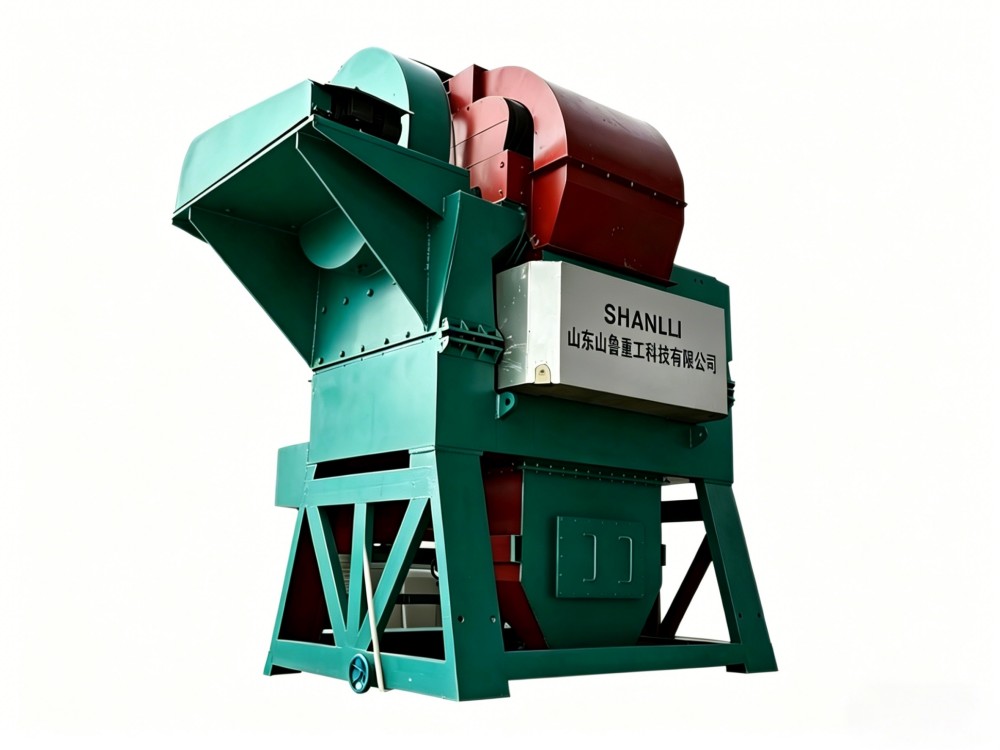
The vertical ring high gradient magnetic separator is a key equipment for
deep iron removal from quartz sand, which can effectively remove weak magnetic
impurities such as magnetite and hematite. However, in actual production,
problems such as magnetic medium blockage, coil overheating, and fluctuations in
iron removal efficiency often occur, directly affecting the quality of finished
products and production line operation rate. Based on common on-site fault
phenomena, the troubleshooting ideas and handling methods are summarized
below.
Frequent blockage of magnetic media leads to decreased flushing effect
Magnetic medium blockage is the most common problem in high gradient magnetic
separators. After the magnetic particles in the slurry are adsorbed on the
surface of the magnetic medium, if the flushing water pressure is insufficient
or the flushing direction is unreasonable, the gaps between the media will
gradually be filled with mineral deposits, resulting in channel contraction or
even complete blockage. The phenomenon is manifested as severe demagnetization
in tailings, a decrease in concentrate production, and an increase in equipment
current.
When troubleshooting, first check whether the flushing water pressure meets
the design requirements, usually maintained at 0.3-0.5MPa. Next, observe whether
the flushing water nozzle is blocked and regularly clean the sediment inside the
nozzle. For models equipped with pulsation mechanisms, check whether the
pulsation box and rubber membrane are working properly. Pulsating fluid force
can effectively prevent medium blockage. If the above checks are normal but
blockages still occur frequently, it is necessary to consider whether the
magnetic medium itself needs to be replaced or cleaned. Some models use
independently removable spring magnetic media, which can be directly removed and
cleaned after blockage.
Excitation coil temperature is too high, cooling system failure
The coil is the core component of a high gradient magnetic separator. If the
cooling is poor during long-term operation, it can cause a decrease in magnetic
field strength, and in severe cases, it can lead to insulation burnout of the
coil. The common reason is that the quality of the cooling water is not clean,
and impurities in the water get stuck at the copper tube diameter change,
causing blockage of the flow channel and a decrease in heat transfer efficiency.
Under the action of a magnetic field, ferromagnetic particles will also adsorb
onto the pipe wall, accelerating scaling.
When dealing with such problems, first check whether the inlet temperature
and flow rate of the cooling water are normal, and check whether the water
temperature detection device displays an over temperature alarm. If the cooling
water is turbid or contains impurities, the filter should be cleaned and a
qualified water source should be replaced. If conditions permit, the open water
cooling system can be transformed into a fully enclosed circulating cooling
system to isolate impurities from the source. At the same time, check whether
the heat exchanger is scaled and perform regular chemical cleaning. Experience
has shown that when the working temperature of the coil is stably controlled
below 40 ℃, the equipment operates most reliably.
The iron removal effect fluctuates, and the iron content in the finished
product is unstable
The sudden deterioration of iron removal effect is usually investigated from
the following aspects. Firstly, check whether the magnetic field strength has
reached the set value. Use a Gaussian meter to measure the magnetic field in the
selected area. If the measured value is lower than the nominal value, check
whether the excitation current is normal and whether the rectifier components
are damaged. Secondly, check whether the concentration and amount of ore feed
fluctuate too much. When the concentration is too high, the flowability of the
slurry is poor and the magnetic particles are difficult to fully contact the
magnetic medium; If the feeding amount is too large, it will exceed the
processing capacity of the equipment, and some magnetic minerals will be
directly passed through the sorting area without being captured. Furthermore,
check whether the magnetic medium is worn or deformed, as the magnetic field
gradient on the surface of the worn medium decreases and the capture ability
weakens. It is also necessary to confirm whether the particle size of the
incoming material has changed. If the grinding fineness becomes coarser, the
magnetic minerals in the coarse particles may be difficult to capture by
magnetic force due to their excessive weight.
Ring jamming and abnormal operation
The swivel is a key moving component that carries magnetic media and
completes the adsorption operation unloading cycle. The common reasons for the
blockage of the rotating ring include poor lubrication or severe wear of the
bearing, the V-belt being too tight or too loose, and foreign objects entering
between the rotating ring and the magnetic pole. Regularly check whether the
fastening bolts are loose 1-2 times a day, and promptly deal with any problems
found. The V-belt should not be adjusted too tightly. Once it gets stuck, the
V-belt can slip spontaneously, thereby protecting important components such as
the motor and gearbox from damage. Bearings should be filled with lubricating
oil at regular intervals and the oil level should be checked for normality.
Electrical control system malfunction
The excitation power supply of a high gradient magnetic separator involves
multiple links such as rectification, voltage regulation, and current
stabilization, and there are various fault phenomena. After turning on, if the
power light does not light up and the fan does not turn, first check if the
three-phase 380V power supply is introduced and if there is any phase loss, and
then check if the automatic switch on the equipment is closed properly. The
power light is on and the fan is running, but there is no voltage indication on
the bus. It is necessary to check the control transformer, potentiometer, and
control board terminals. No load is normal, but there is no current output after
adding load. Focus on checking whether the contact of each point of the load is
good, and whether the connection of the internal busbar and shunt is tight.
After running for a period of time, if the output is blocked, there is no
voltage or current, and the indicator light flashes, it is usually due to
temperature protection, overcurrent protection, or power phase loss action. It
is necessary to strengthen heat dissipation, check load current, or troubleshoot
input power.
In daily maintenance, equipment operation records should be established,
including key parameters such as magnetic field strength detection values, coil
temperature, flushing water pressure, and processing capacity, in order to
quickly locate problems in case of abnormalities. For complex faults such as
electrical systems, it is recommended to contact professional technicians for
handling.
Shanlu Heavy Industry has accumulated rich experience in the field of quartz
sand magnetic separation equipment, and can provide equipment selection,
parameter optimization, and upgrading services based on customer material
characteristics and on-site working conditions. If you encounter specific
problems during equipment operation and need technical support, you can contact
the technical team of Shandong Heavy Industry for communication: Manager Zhang
13583776655 (same as WeChat).