Blocked settling machine bottom flow discharge is another common problem in
grading operations. The bottom flow cannot be discharged, and coarse particles
accumulate more and more inside the cylinder, which not only affects the
classification accuracy, but may also crush the ore discharge valve and even
damage the equipment.
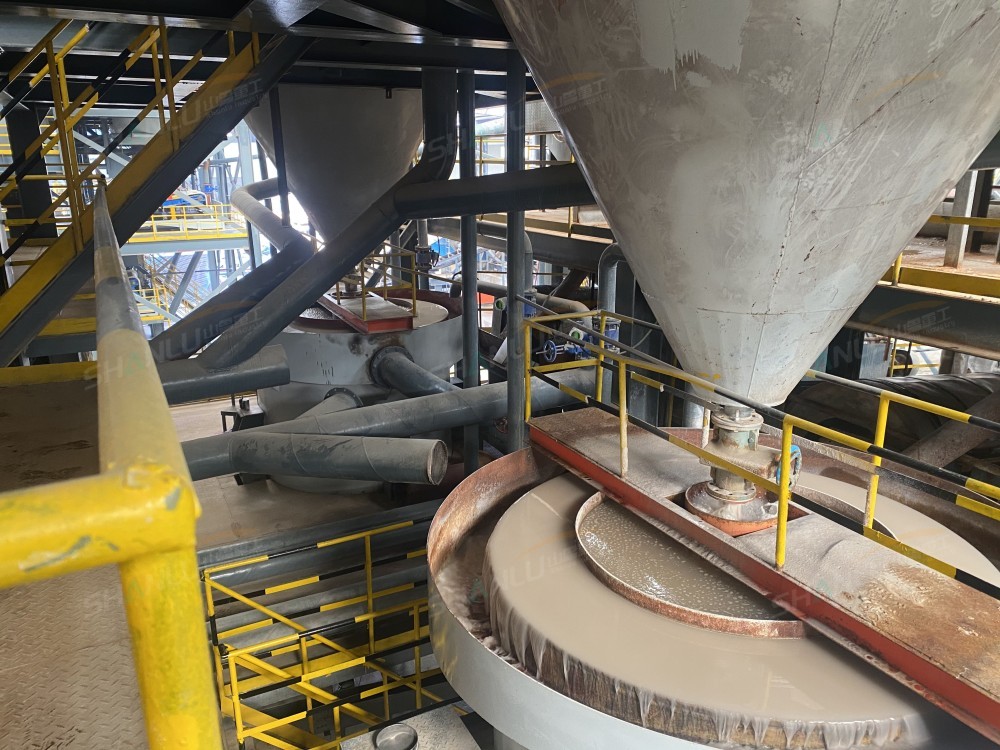
The blockage of the ore discharge valve is the primary point of
investigation. The bottom of the obstructed settling machine is usually equipped
with electric or pneumatic discharge valves, which are controlled by rubber hose
clamps or gate plates for discharge. Once coarse particles or occasional
impurities (such as broken steel bars and stones) in quartz sand get stuck at
the valve, the discharge will be interrupted. When checking, first listen to the
sound of the valve action to see if it is normal, and then open the valve to
check if there are any foreign objects stuck in the rubber hose or gate. After
cleaning up the debris and restarting, the discharge can usually be restored to
normal.
The accumulation of material on the steady flow plate can also lead to poor
discharge. The function of a steady flow plate (turbulent flow plate) is to
evenly distribute the rising water flow. After long-term operation, coarse
particles will gradually accumulate on the flat surface of the steady flow
plate, and when they accumulate to a certain extent, they will block the sand
settling port, preventing the coarse sand from being discharged. It is
recommended to observe the bottom flow discharge status every shift. If the
discharge volume decreases or is intermittent, stop the machine to check if
there is any material accumulation on the steady flow plate and clean it up in a
timely manner.
The failure of water stop protection can also cause blockage. The water tank
at the lower part of the partially obstructed settling machine cylinder is
equipped with a special device, which automatically closes the upper water hole
when the water stops, preventing material from flowing back into the cylinder
and blocking the upper water hole. If the device malfunctions, the slurry will
flow back into the water tank and pipeline after the water is stopped. When
restarted, the water flow will be poor and the grading effect will be greatly
reduced. Regularly check whether the water stop protection device is
sensitive.
In the early stage of poor bottom flow discharge, it is often just a decrease
in displacement, which is easily overlooked. Once the discharge valve is
completely blocked, it will become troublesome to handle. It is recommended to
observe the bottom flow discharge status at least once per shift and promptly
handle any abnormalities found. For equipment operation related issues, please
feel free to contact the technical team of Shandong Heavy Industry: Manager
Zhang at 13583776655 (same as WeChat).