There is an easily overlooked phenomenon in the operation of a single drum
dryer: although the production capacity meets the design requirements and the
moisture content of the discharge is also qualified, the consumption of
combustible gas or coal is much higher than the design value, and the operating
cost quietly rises. Operators often only focus on the two indicators of yield
and moisture, thinking that "it's enough to dry it out", but ignore the
continuous decline in thermal efficiency. The problem usually lies in the
coordination between the direction of hot air and the trajectory of material
movement.
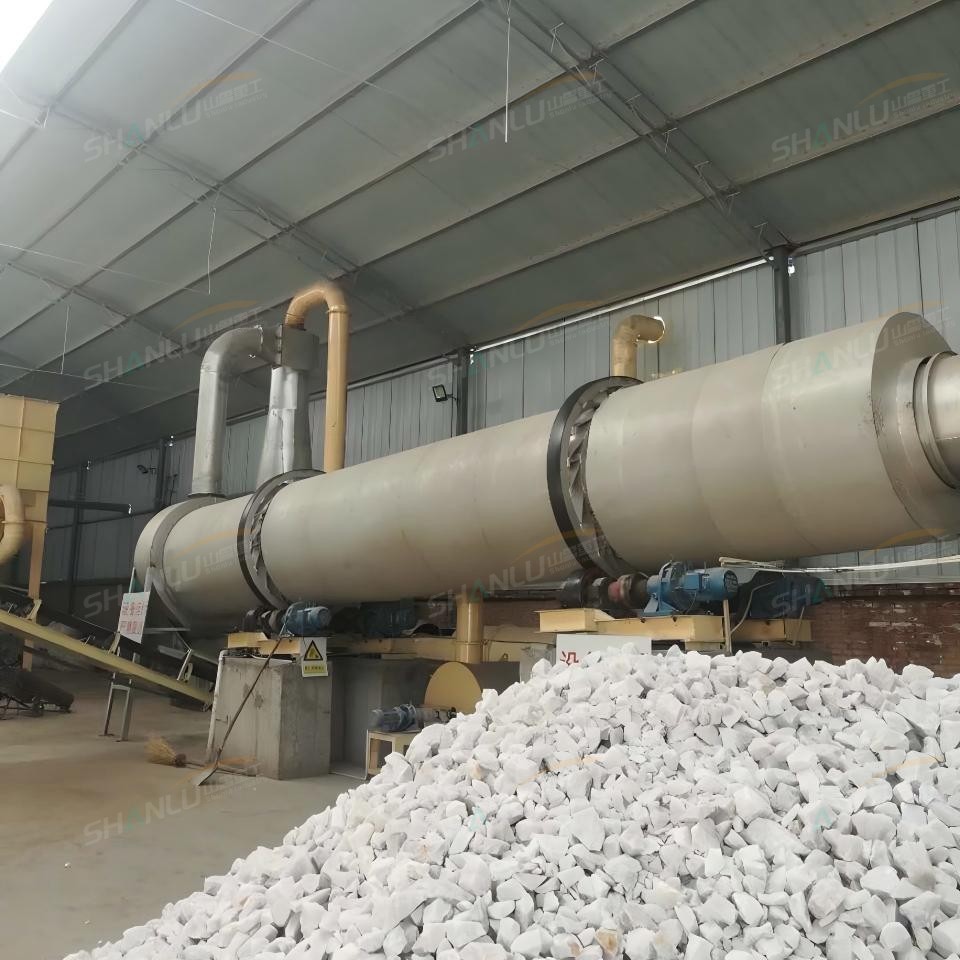
The hot air inside the cylinder is short circuited, and the heat runs away
before it can exchange heat with the material. After the hot air from the
combustion chamber enters the cylinder of a single drum dryer, the ideal state
is to evenly distribute it along the entire length of the cylinder and fully
contact and exchange heat with the material. However, when the arrangement of
the plates inside the cylinder is improper or some of the plates are worn or
missing, the material is not fully lifted in a certain section of the cylinder,
and there is a gap in the material curtain. Hot air passes directly through the
gap and is discharged from the discharge end without sufficient heat exchange.
The exhaust temperature is significantly high, and touching the exhaust duct at
the discharge end feels hot, indicating that a large amount of heat has been
carried away by the white smoke. Suggest entering through the manhole door to
check if the layout of the copied boards is continuous and if there are any
large areas of missing boards. Install the missing copied boards and adjust the
spacing to 150-200mm.
The material accumulates at the feeding end, and the hot air is "trapped" by
the wet material. When the feeding amount is too large or the feeding end plate
is worn, the wet sand accumulates too thick at the head of the cylinder, and the
hot air needs to penetrate the thick material layer before reaching the middle
and rear sections. The heat exchange in the first half is insufficient, and
there is excess heat in the second half. The manifestation is that the moisture
content at the discharge end is qualified, but the surface temperature of the
feed end cylinder is low, and the exhaust temperature is high. Check the wear of
the feeding end plate, reduce the feeding amount appropriately to allow the
material to quickly spread out at the head and avoid accumulation. Reduce the
frequency of the feeder by 5% each time and observe the changes in exhaust
temperature and fuel consumption.
The insulation layer of the cylinder appears to be intact, but in reality,
some parts have failed. Whether the color steel plate covering the insulation
layer is intact or not means that there is no problem with the internal rock
wool - after long-term vibration, the rock wool sinks and compacts, causing
cavities in the upper half of the cylinder, greatly reducing the insulation
effect. Measure the surface temperature along the top and side of the cylinder
using an infrared thermometer. If the top is significantly higher than the side,
it indicates that the upper insulation layer has failed. Cut open the color
steel plate during repair, fill with rock wool and compact it, and restore the
thickness of the insulation layer. The cost of this inspection is not high, but
the energy consumption improvement effect is direct.
Meeting production capacity standards does not necessarily mean meeting
thermal efficiency standards. When fuel consumption quietly increases, following
the order of "checking the material curtain inside the cylinder first, then
checking the material accumulation, and finally measuring the insulation layer"
is more effective than blindly increasing the hot air temperature. Encountering
problems during equipment operation, welcome to contact the technical team of
Shandong Heavy Industry for communication: Manager Zhang 13583776655 (same as
WeChat).